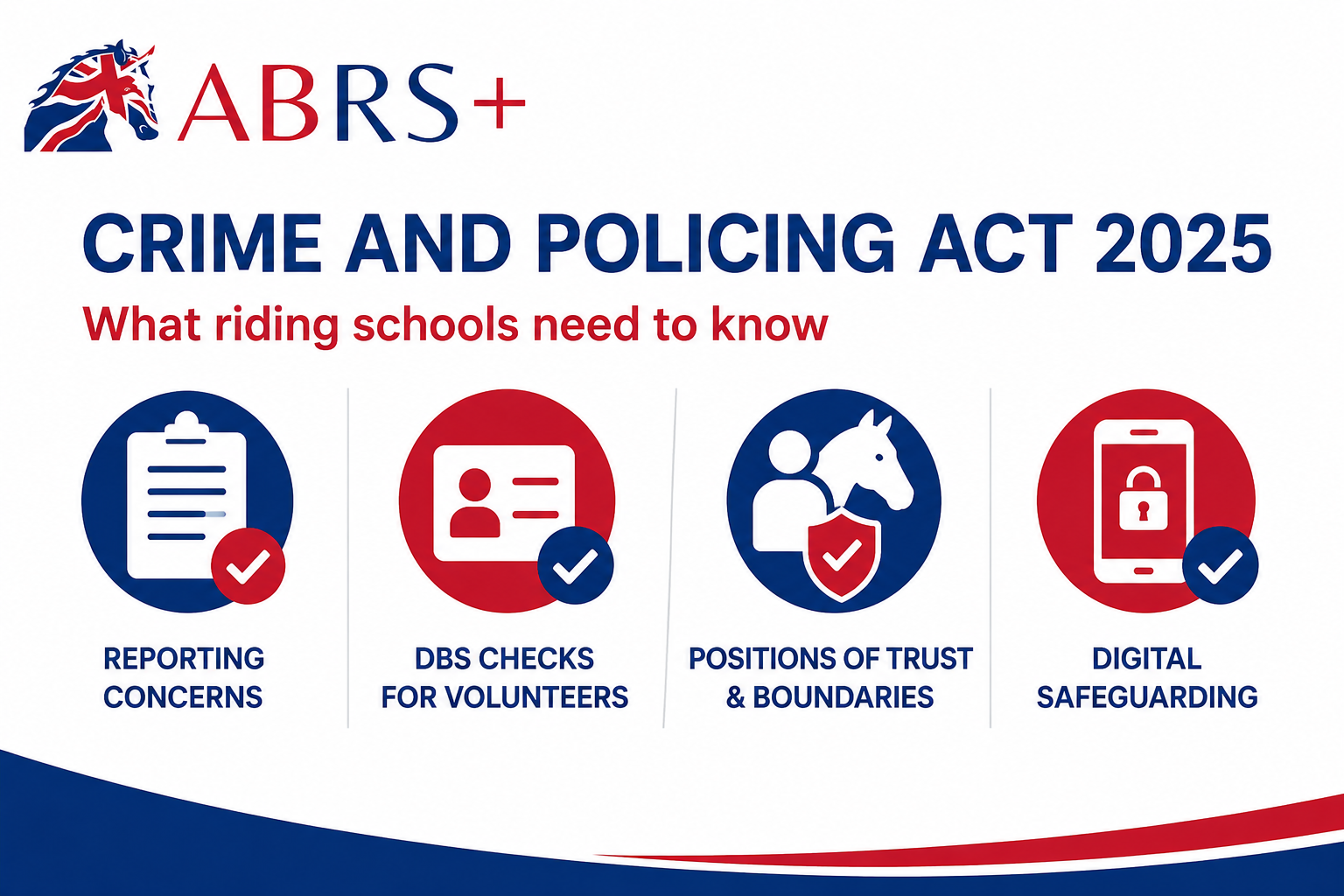
Recent legislative changes strengthen safeguarding expectations across sport and leisure organisations. Most riding schools already have appropriate safeguarding arrangements in place, but proprietors should review policies, procedures and training to ensure they remain up to date. The Act does introduce new responsibilities.
1. Reporting Safeguarding Concerns
- Ensure all staff, volunteers and contractors know how to report concerns.
- Ensure concerns are reported promptly to the Equestrian Safeguarding Officer (ESO).
- Ensure staff understand they should not assume someone else has taken action, and that it is an offence to obstruct or delay a report.
- Promote a culture where people feel able to raise concerns.
- Review safeguarding, reporting and whistleblowing procedures.
2. Positions of Trust and Professional Boundaries
- Instructors, coaches, volunteers and yard staff may hold a Position of Trust.
- Review Codes of Conduct and safeguarding procedures.
- Provide guidance on social media, private messaging, transport, gifts, favouritism and one-to-one situations.
- Encourage early reporting of boundary concerns.
- Many safeguarding concerns begin with poor boundaries rather than obvious abuse.
3. DBS Checks and Volunteers
- Review volunteer roles before September 2026.
- Identify volunteers who regularly teach, train, instruct, supervise or care for children – they no longer fall under the supervision exemption and require an Enhanced DBS with Barred Lists.
- Roles potentially affected include camp helpers, assistant instructors, lead-rein helpers and regular youth activity volunteers.
- If you have difficulty with processing Enhanced DBS applications, speak to us – we can help.
4. Digital Safeguarding
- Review online safety guidance and social media arrangements.
- Use approved communication channels.
- Avoid personal messaging between staff and young riders.
- Ensure staff understand online grooming, image-based abuse, AI-generated images, cyberbullying and online harassment risks.
5. What Does Not Need to Change?
- Most riding schools already have a safeguarding policy, an ESO, Codes of Conduct, reporting procedures and safer recruitment arrangements.
- The aim is generally to update and strengthen existing arrangements rather than create entirely new systems.
ABRS+ Support
- ABRS+ members have access to template safeguarding policies, procedures, Codes of Conduct, Position of Trust guidance and related resources in the Members’ Area.
- Many of the issues identified in this briefing are already addressed within ABRS+ template documents and can be adopted or adapted by member centres.
- Members are encouraged to review the latest versions of these resources and ensure local procedures remain current.
Immediate Actions for Proprietors
- Review Safeguarding Policy.
- Update Code of Conduct.
- Review Position of Trust guidance.
- Review volunteer DBS requirements.
- Review social media and communication practices.
- Ensure staff and volunteers understand reporting procedures.
- Update safeguarding training when next reviewed.